Director’s Statement | Ken Schneider, Co-Director & Editor
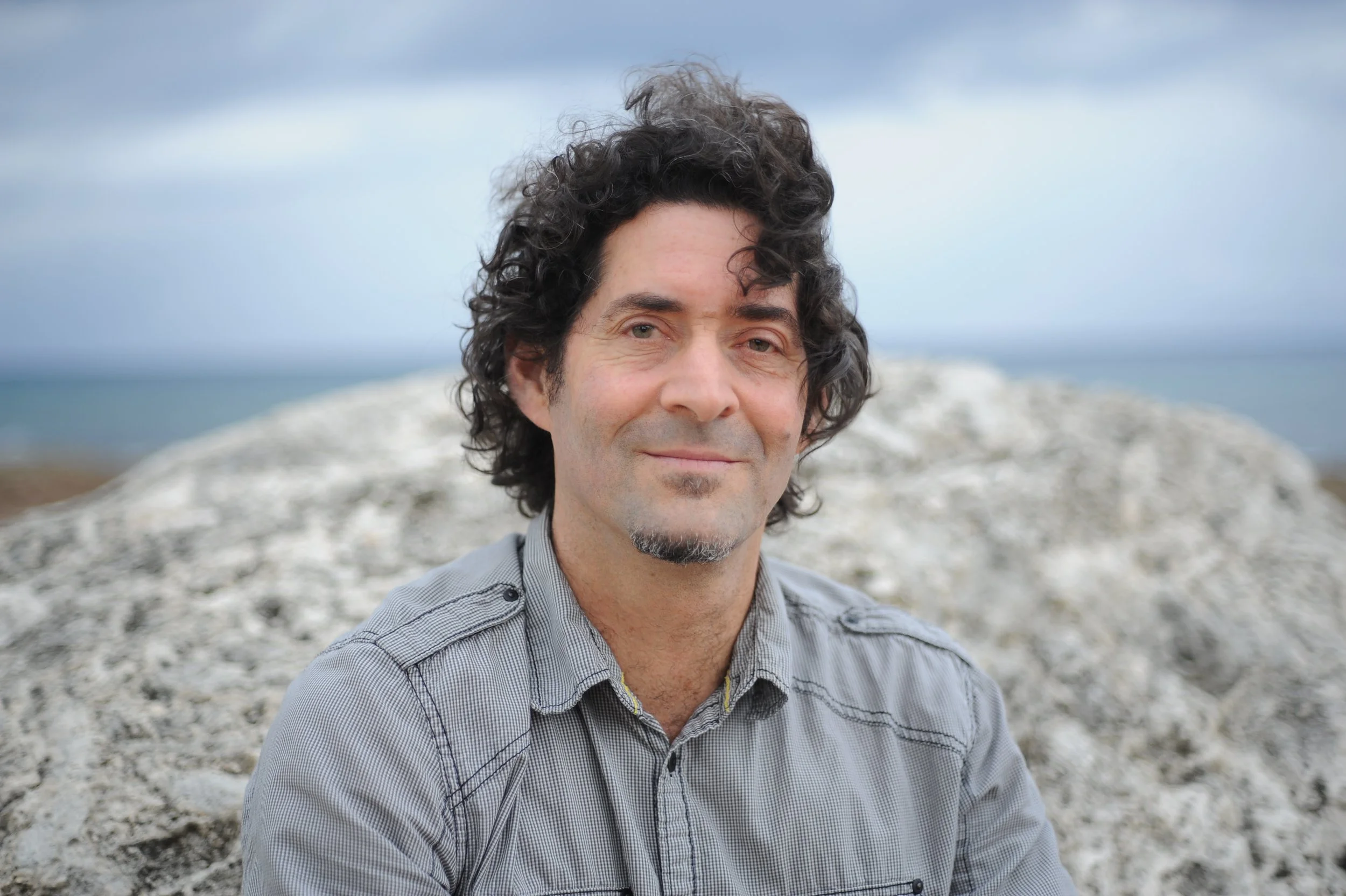
Nearly 40 years as a documentarian has allowed me to focus on my core values: human rights, disinterring buried histories, and people-powered democracy. Documentaries afford us the privilege of both the wide angle—the big picture view—and the close up of the individuals both entangled in the story and engaged in changing it.
My many collaborations with Abby Ginzberg, about a Latino civil rights advocate who became a judge; a white hero of the anti-apartheid movement in South Africa; a female media and political pioneer in Texas; and Japanese Americans unjustly incarcerated during WW2, expand stories from only a few lines in a history text into deeper character studies of what it means to be fully human.
When Abby and I grappled with how best to respond to this confusing and sometimes frightening political moment, we lit on the U.S. Constitution. Federal judges who’ve staked their careers, and sometimes their safety, on that document, presented themselves as the stars of our movie.
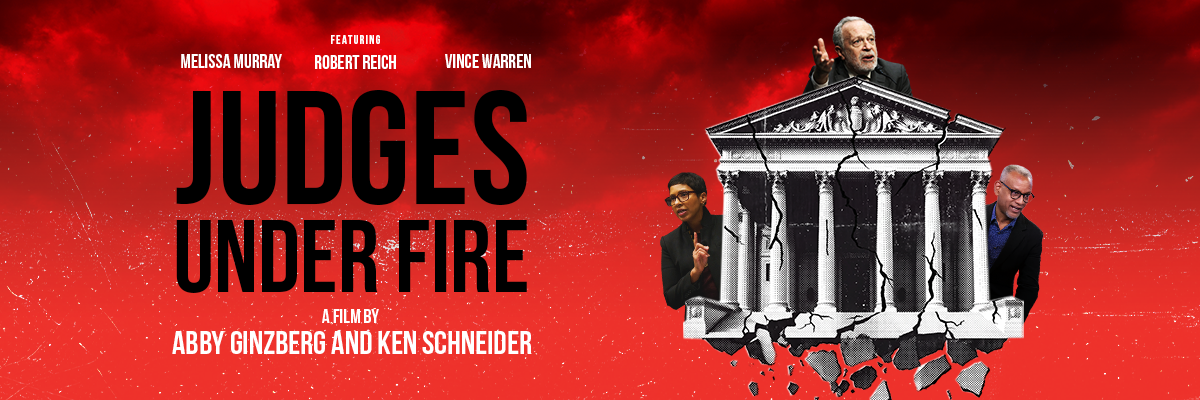
Judges Under Fire poses essential questions about our democracy: What happens to the rule of law when judges themselves become the target of political intimidation and threats because of the work they are constitutionally required to do? What happens if we lose the independence of the judiciary?
“Kill the lawyers first” is an old joke that actually provides a road map for autocrats. Political scientists, historians and judges across the political spectrum agree that the independent judiciary is the tentpole on which democracies rest. I wanted to make this film because it felt urgent, as I see how few Americans understand how the federal courts actually function, and that many of us define a judge’s value based on our own politics.
A film can be experienced in community, educational, and online environments. It has to be able to meet viewers where they are, to recognize their hopes, dreams, nightmares and cynicisms. The judges in our film are disloyal, if one thinks they should support the leaders who appointed them. Yet they are the pinnacle of the democratic vision, as time and again they demonstrate loyalty to their true boss, the Constitution.
These themes and stories do not belong to lawyers, judges, scholars, and pundits—they are intended for all of us, with our range of understandings of how democracy works, and why it is worth fighting for. My hope is that my allies and adversaries, my students and teachers, my “liberal” and “conservative” friends can ruminate on these stories, and like myself, become more patriotic as a result. If our film can help make our legal institutions more comprehensible, and help audiences understand why their independence matters, then we will have succeeded.
Director’s Statement | Abby Ginzberg, Co-Director/Producer

For much of my career, I have been drawn to stories about the people and institutions responsible for making the promise of justice real. I made Soul of Justice about Judge Thelton Henderson because his life demonstrated what judicial courage can mean in practice. I made Sowing the Seeds of Justice about Justice Cruz Reynoso because his journey showed how one person’s commitment to equal justice can reverberate through an entire legal system. Judging Juries examined who gets to participate in that system and whether our juries truly represent the communities whose lives they judge. Barbara Lee: Speaking Truth to Power explored what it means to stand on principle when doing so may carry enormous personal and political consequences.
And when Ken Schneider and I made And Then They Came for Us, we returned to one of the most consequential failures of constitutional protections in American history—the incarceration of Japanese Americans during World War II—and asked what that history requires of us in the present. Judges Under Fire grows naturally from that body of work.
The rule of law is not an abstraction. It depends upon institutions, but ultimately it depends upon people—people willing to uphold the Constitution, protect due process, and exercise independent judgment even when doing so is difficult, unpopular, or personally costly. I wanted to make Judges Under Fire because most Americans encounter the judiciary only through individual rulings or headlines. The film asks audiences to look beyond any single case and consider a larger civic question: What does an independent judiciary mean to a constitutional democracy, and what happens when the people entrusted with that responsibility come under extraordinary pressure?
This is not a film asking audiences to agree with every judge or every decision. It is an invitation to understand why courts exist, why judicial independence matters, and why the rule of law depends upon institutions capable of applying the Constitution without fear or favor.
My hope is that Judges Under Fire becomes more than a film. I hope it becomes a catalyst for conversation—in law schools and universities, bar associations and court communities, classrooms, libraries, civic organizations, and communities across the country. At a moment when Americans may disagree profoundly about politics and policy, understanding the institutions that allow those disagreements to exist within a constitutional system is essential civic knowledge. That is why I made this film.